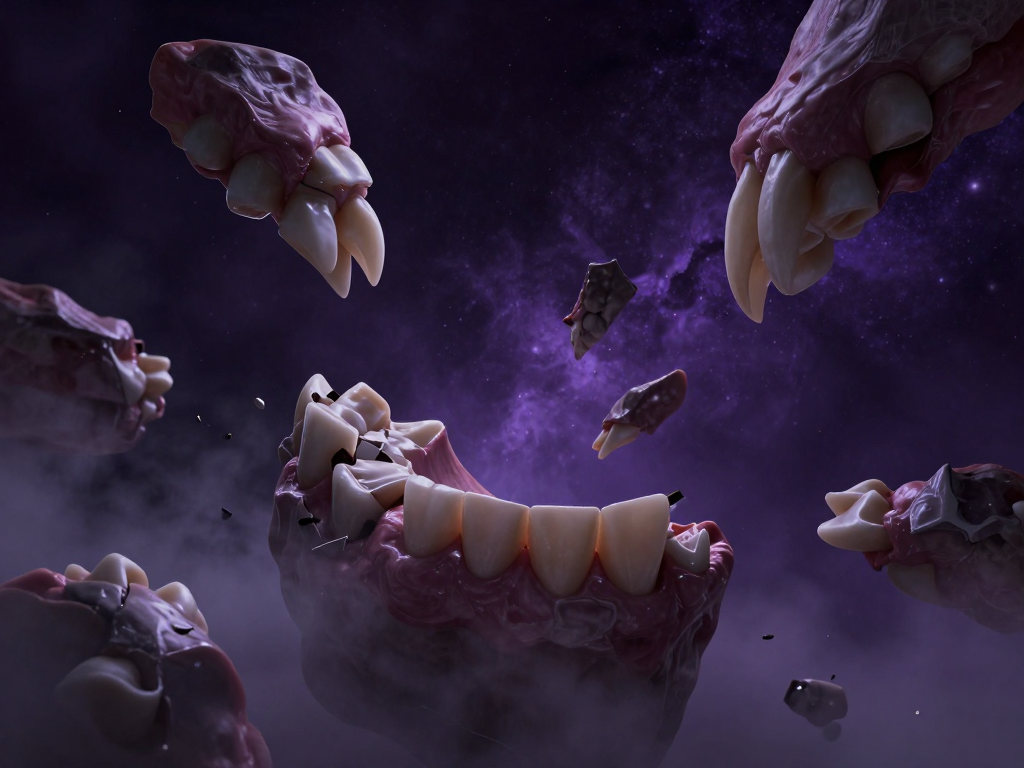
You're mid-conversation, maybe at a party or giving a presentation, when suddenly something feels wrong in your mouth. You reach up, and a tooth wiggles free. Then another. Before long, your palm is full of teeth and your mouth is a gap-toothed mess. You wake with your heart pounding, tongue instinctively running across your very-much-intact teeth. Sound familiar?
If it does, you are far from alone. The teeth falling out dream meaning has fascinated psychologists, spiritual leaders, and everyday dreamers for centuries. It consistently ranks as one of the top five most reported dream themes across the globe, cutting across every culture, age group, and background.
The Teeth Dream: Why It Is So Common
Research published in Frontiers in Psychology estimates that roughly 39 percent of the population has experienced a teeth-loss dream at least once, while about 16 percent report it as a recurring theme. Some studies push those numbers even higher. The sheer universality of this dream suggests it taps into something deeply human — anxieties and experiences that transcend individual circumstances. Teeth are among the first things we notice about other people and among the first body parts we become conscious of as children. They are tied to survival (eating), communication (speaking), and attractiveness (smiling). When they fall out in a dream, it strikes at the core of how we present ourselves to the world.
7 Common Meanings of Teeth Falling Out Dreams
1. Anxiety and Stress — The most widely accepted teeth dream meaning is that it reflects generalized anxiety. When life feels out of control — deadlines looming, relationship tensions, financial pressure — the subconscious translates that diffuse worry into a concrete, visceral image: losing your teeth. Researchers at Ben-Gurion University found a correlation between dental dream frequency and psychological distress, particularly during periods of major life change.
2. Fear of Loss or Change — Teeth are permanent fixtures (once your adult teeth come in, you expect them to stay). Dreaming of losing them can symbolize fear of losing something you consider stable: a relationship, a job, your health, or even your youth. The dream dramatizes the feeling that something irreplaceable is slipping away.
3. Self-Image and Confidence — Because teeth play such a visible role in appearance, their loss in a dream often reflects insecurity about how others perceive you. If you have been feeling unattractive, socially awkward, or judged, your subconscious may stage a teeth-falling-out scenario to externalize those feelings.
4. Communication Difficulties — Teeth are essential for speech. Losing them in a dream can point to situations where you feel unable to express yourself — perhaps you swallowed words you needed to say, or you fear that speaking up will lead to rejection. If you recently avoided a difficult conversation, this dream may be your mind's nudge to speak your truth.
5. Powerlessness and Vulnerability — Without teeth, we cannot bite, chew, or defend ourselves. This dream can surface when you feel disempowered — perhaps someone is making decisions for you, or you are stuck in a situation where you have no say. The dream is a metaphor for feeling defenceless.
6. Regret Over Something Said — Interestingly, some interpreters read this dream in the opposite direction: not the inability to speak, but regret over something already spoken. If you recently said something hurtful or embarrassing, the dream may represent a wish to take those words back — the teeth leaving your mouth just as words did.
7. A Period of Personal Growth — Not all teeth-loss dreams are negative. Just as children lose baby teeth to make way for adult ones, dreaming of losing teeth can symbolize a transitional phase — shedding an old identity, outgrowing a relationship, or stepping into a new stage of life. The discomfort in the dream mirrors the discomfort of growth.
Cultural Perspectives
In Western psychology, the teeth falling out dream meaning is most commonly linked to anxiety and self-image. Freud interpreted it as a symbol of sexual repression and castration anxiety, while more modern therapists see it as a straightforward stress barometer.
In many Eastern traditions, teeth dreams carry different connotations. In Chinese dream interpretation, losing teeth is sometimes associated with telling lies — the idea that dishonesty costs you something essential. Some Chinese folk traditions also link teeth dreams to concern for family elders' health.
In Islamic dream interpretation, teeth often symbolize family members. Upper teeth may represent male relatives and lower teeth female relatives. Losing a tooth can signal worry about a family member's wellbeing or foreshadow news about the family. The specific tooth and the manner of its loss add layers of meaning within this tradition.
In Greek folklore, dreaming of teeth falling out was considered an omen related to the death or illness of a family member. Similar beliefs exist in parts of Latin America and the Caribbean, where the dream is treated with solemnity.
What Psychology Says
Sigmund Freud saw teeth dreams through the lens of repressed desire, connecting them to anxiety about sexuality and physical appearance. Carl Jung took a broader view, interpreting teeth loss as a symbol of rebirth — the painful but necessary process of psychological transformation.
Modern research has moved beyond these classical frameworks. A 2018 study in the journal Sleep found that people who grind their teeth at night (bruxism) are more likely to report teeth dreams, suggesting a simple somatic explanation: the physical sensation of jaw tension gets incorporated into dream content. However, this does not explain the millions of non-grinders who have the same dream.
Cognitive psychologists tend to view teeth dreams as a manifestation of the brain's threat-detection system. During REM sleep, the amygdala is highly active, and the brain is essentially running simulations of threatening scenarios. Losing teeth — a genuinely alarming prospect in waking life — is a ready-made threat scenario that the dreaming brain returns to again and again.
Common Scenarios
Teeth crumbling slowly — This version often appears when stress is chronic rather than acute. The slow disintegration mirrors a situation that is deteriorating gradually: a relationship losing warmth, motivation fading at work, or health declining over time. It reflects the anxiety of watching something fall apart and feeling unable to stop it.
Teeth falling into your hands — When you catch the teeth as they fall, it can suggest a desire to hold on to something you are losing, or an attempt to maintain control in an uncontrollable situation. It may also indicate self-awareness — you know something is wrong and you are trying to manage it.
Teeth being pulled out by someone else — This scenario often reflects feelings of powerlessness in a specific relationship. Someone may be making decisions that affect you without your consent, or you may feel that another person is taking something from you — your time, your energy, your autonomy.
Spitting out teeth one by one — This variation is frequently linked to communication issues. Spitting suggests expulsion — something coming out of your mouth that should not. It may connect to words spoken impulsively, secrets revealed, or lies told.
What Our AI Dream Interpreter Says
When users log teeth-falling-out dreams in our app, our AI dream interpreter analyzes the full context of the dream — not just the teeth, but who was present, where you were, how you felt, and what happened before and after. For example, one user dreamed of losing teeth during a job interview. Our interpreter identified the core theme as performance anxiety and fear of being judged, then offered personalized suggestions including journaling prompts and a breathing technique for pre-interview nerves. Another user dreamed of crumbling teeth while looking in a mirror; the interpretation highlighted self-image concerns and recommended exploring what had recently changed in how they saw themselves. Context is everything, and that is exactly what AI-powered interpretation excels at: finding patterns across your unique dream history that a generic dream dictionary never could.
When to Be Concerned
An occasional teeth dream is perfectly normal and nothing to worry about. However, if the dream recurs frequently — multiple times a month — it may be signaling chronic stress, unresolved anxiety, or an issue you are actively avoiding in waking life. Recurring teeth dreams have been linked in research to higher levels of depression and anxiety symptoms. If the dreams are accompanied by teeth grinding, jaw pain upon waking, or disrupted sleep, it is worth consulting a healthcare professional. Persistent nightmares of any kind can be addressed through techniques like Image Rehearsal Therapy (IRT), which has strong clinical evidence for reducing nightmare frequency.
Teeth falling out dreams, unsettling as they are, carry valuable information. They are your subconscious mind waving a flag, pointing you toward something that needs attention — whether it is stress you have been ignoring, a conversation you have been avoiding, or a transition you have been resisting. The next time you wake from this dream, instead of just feeling relieved that your teeth are still there, take a moment to journal the details. Write down who was in the dream, where it took place, and how you felt. Those details are the key to unlocking the personal meaning behind this universal dream. Your sleeping mind is wiser than you think — listen to it.