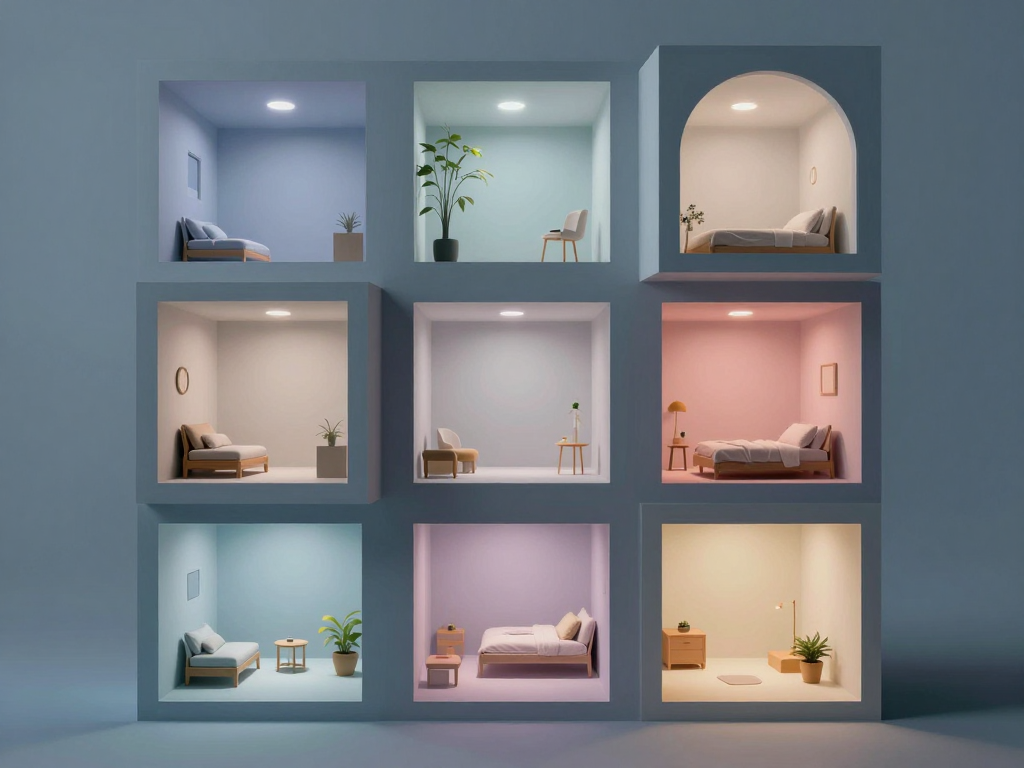
You are walking through a house. It might be the house you grew up in — the kitchen wallpaper, the creak of the third stair, the particular slant of afternoon light through the living room window. Or it might be a house you have never seen before but somehow recognize as yours. You open a door and discover a room you did not know existed — a vast library, a sunlit conservatory, an entire wing that was always there but somehow hidden. The feeling is unmistakable: wonder, curiosity, a sense of discovering something about yourself that you had not known was there.
House dreams are among the most commonly reported dreams worldwide and among the most psychologically revealing. In virtually every major school of dream interpretation — Freudian, Jungian, Gestalt, cognitive, existential — the house is understood as a representation of the self. Not your body, not your ego, but your total psychological architecture: every room a different aspect of your identity, every floor a different level of consciousness, every condition of the building a reflection of your inner state. A survey of dream content across 20,000 entries in dream research databases found that houses and buildings appeared in approximately 25 to 30 percent of all recorded dreams, making them the single most common dream setting after undefined or outdoor spaces.
Why House Dreams Are So Universal
The house-as-self metaphor is not an arbitrary interpretation imposed by therapists — it is embedded in the structure of human cognition. We naturally speak of our inner lives in architectural terms: we talk about building character, having a strong foundation, needing room to grow, feeling rooms of our personality opening up, keeping things in the basement of our minds. These are not random metaphors — they reflect the brain's deep tendency to map psychological experience onto spatial structures.
Neuroscience confirms this connection. The hippocampus, the brain region most critical for spatial navigation and memory formation, is also deeply involved in the construction of dream environments. When you dream of a house, the hippocampus is literally building a spatial representation of your psychological state. The house is not a decoration or a backdrop — it is the map your brain draws of your inner world.
The universality also reflects lived experience. The house is typically the first complex environment a child learns to navigate, and the childhood home becomes a template for understanding all subsequent enclosed spaces — including the inner space of the psyche. Your relationship with your childhood home — whether it felt safe or threatening, spacious or confining, warm or cold — shapes how your brain constructs house imagery in dreams for the rest of your life.
What Every Room Means
The Kitchen — In dream symbolism, the kitchen represents nourishment, transformation, and the processes by which raw material becomes sustaining substance. Dreams set in kitchens often relate to self-care, creativity, emotional nourishment, and the processing of life experiences. A clean, well-stocked kitchen suggests that you are taking care of yourself and have resources available. A dirty or chaotic kitchen may reflect neglected self-care or emotional overwhelm. Cooking in a dream kitchen often represents the creative transformation of experience into wisdom — you are making something meaningful from the raw ingredients of your life.
The Bedroom — The bedroom represents your most private self — your intimate desires, sexual identity, vulnerability, and the aspects of yourself that you share only in the most trusted relationships or not at all. Dreams about bedrooms often surface during periods of romantic or sexual change, during conflicts about intimacy, or when the dreamer is exploring aspects of identity that feel too private or too vulnerable for public expression. A bedroom that feels invaded or exposed may reflect boundary violations in waking life.
The Bathroom — The bathroom in dreams represents cleansing, release, and the processing of emotional or psychological waste. Dreams of overflowing toilets, broken showers, or bathrooms without privacy often reflect the need to release emotions that have been held in too long, or the anxiety that private emotional processing will be exposed publicly. A bathroom dream during a stressful period is your psyche signaling that emotional waste needs to be processed and released.
The Basement — This is perhaps the most psychologically loaded room in dream interpretation. The basement represents the unconscious mind — the repository of repressed memories, shadow material, primal instincts, and everything you have pushed below the surface of conscious awareness. Descending into a basement in a dream is literally descending into the unconscious. What you find there — whether it is frightening, surprising, or illuminating — represents material that is ready to be brought into consciousness. A flooded basement may indicate that unconscious material is overwhelming your ability to contain it. A dark, unexplored basement suggests unconscious territory that has never been examined.
The Attic — If the basement represents the unconscious, the attic represents higher consciousness, spiritual aspiration, memories, and the accumulated wisdom of past experience. Attics in dreams often contain old objects — boxes of photographs, childhood toys, forgotten belongings — representing memories and aspects of identity that have been stored away. Exploring the attic may indicate a need to reconnect with your past, to access wisdom or creativity that you have set aside, or to ascend to a higher perspective on current problems.
The Living Room — The living room represents your public self — the persona you present to the world, your social identity, how you interact with others in visible, socially expected ways. The condition and decoration of the living room in your dream reflects how comfortable you are with your public persona. A beautiful living room that feels hollow may reflect a polished exterior concealing inner emptiness. A messy living room may reflect social anxiety or a feeling that your public life is disorganized.
Stairs and Hallways — Stairs represent transitions between levels of consciousness — movement between the unconscious (basement), the everyday self (ground floor), and higher awareness (upper floors/attic). Going up stairs suggests psychological growth, aspiration, or moving toward higher understanding. Going down stairs suggests exploration of the unconscious or regression. Hallways represent transitions between different aspects of the self — the journey between one room (one psychological state) and another. A long, dark hallway may represent anxiety about a transition you are currently navigating.
Doors and Windows — Doors represent opportunities, choices, and transitions. An open door invites exploration or change. A locked door suggests blocked opportunity, repressed material, or a choice that feels unavailable. A door you are afraid to open represents an aspect of yourself or your life that you are avoiding. Windows represent perspective, awareness, and the boundary between inner and outer worlds. Looking out a window suggests gaining perspective; a broken window may reflect a compromised boundary between your inner life and external demands.
Cultural Perspectives
In Chinese dream interpretation, influenced by feng shui principles, the orientation and condition of rooms in a dream house carry specific meanings related to the flow of chi (life energy). A house with good energy flow suggests psychological and spiritual harmony; blocked doorways or cluttered rooms indicate energy stagnation in the corresponding life area. The kitchen corresponds to wealth and resources, the bedroom to relationships, and the main entrance to the dreamer's connection with opportunity and the wider world.
In Islamic dream interpretation, a house typically represents the dreamer's life situation, with specific rooms corresponding to different aspects of family life and faith. A new house may indicate a new chapter in life; a ruined house may warn of spiritual neglect. The condition of the house's foundation is particularly significant, representing the strength of the dreamer's faith and moral character.
In Jungian analytical psychology, the house dream is considered one of the most important dream motifs. Jung himself had a famous recurring dream of a house with multiple levels, which he interpreted as a map of the human psyche — from the modern, furnished upper floors (conscious ego) through the medieval ground floor (personal unconscious) to the ancient basement and cave beneath (collective unconscious). He used this dream as a foundational metaphor for his entire model of the psyche.
In the Indian Vedantic tradition, the body itself is understood as a house for the atman (soul), and dreams of houses may reflect the dreamer's relationship with embodiment, with the material world, and with the spiritual self that inhabits the body. A beautiful house represents spiritual well-being; a crumbling house may indicate neglect of spiritual practice.
Common House Dream Scenarios
Discovering new rooms — This is one of the most exhilarating dream experiences and among the most frequently reported house dream scenarios. You are in a familiar house and open a door to discover a room — or an entire section — that you never knew existed. The room is usually positive: spacious, beautiful, full of light or interesting objects. This dream represents the discovery of untapped potential within yourself — abilities, desires, or dimensions of your personality that have been present but unexplored. The dream is your psyche saying: there is more to you than you know. The recurring nature of this dream often indicates that the unexplored potential is persistent and significant.
The childhood home — Dreaming of the house you grew up in is one of the most emotionally charged house dream types. The childhood home represents your foundational identity — the self that was formed before you had the ability to choose who you would be. Returning to this house in dreams often occurs during times of stress, transition, or identity questioning, when the psyche seeks the bedrock of original self. The condition of the childhood home in the dream matters: a well-maintained home suggests a solid psychological foundation; a decaying home may reflect unresolved childhood wounds.
A house in disrepair — Dreams of a crumbling, flooded, or damaged house reflect a sense that your psychological structure is under stress. The specific type of damage often points to the specific area of concern: a leaking roof may reflect intellectual overwhelm (too much coming in from above), foundation cracks may reflect threatened core beliefs, and broken windows may reflect compromised boundaries. These dreams are not cause for alarm — they are diagnostic tools, showing you exactly where your psychological architecture needs attention.
Being locked out of your own house — This distressing dream reflects a feeling of being disconnected from yourself — unable to access your own inner resources, shut out of your own identity. It often appears during periods of depersonalization, burnout, or major identity transition. The dream is not saying you are lost — it is saying you temporarily cannot find the key. The key, symbolically, is usually self-compassion, rest, or reconnection with core values.
The Twist — What Most People Miss About House Dreams
Here is the insight that transforms house dream interpretation from interesting to genuinely useful: the house in your dream is not a static symbol — it is a living, evolving map that changes as you change. If you track your house dreams over time through a dream journal, you will notice that the house evolves. Rooms that were dark become lit. Locked doors open. Basements that were flooded dry out. New rooms appear as you develop new aspects of yourself. The house is not a snapshot — it is a time-lapse of your psychological development.
This means that a single house dream is informative, but a series of house dreams is transformative. The comparison between your house dreams over months or years reveals your psychological trajectory more clearly than almost any other dream motif. Are you expanding or contracting? Are new rooms appearing or are familiar ones deteriorating? Is the house becoming more comfortable or more threatening? These patterns answer questions about your inner development that you may not even know to ask.
The second twist is that every element of the house is you. Not just the rooms — the furniture, the lighting, the temperature, the sounds, the visitors, the condition of every surface and object. If the kitchen faucet is leaking, something in your nourishment system is slowly draining. If the front door is wide open, your boundaries may need attention. If the house is filled with strangers, you may be losing yourself in others' expectations. The level of detail in house dreams rewards the closest possible attention.
What to Do When You Dream About a House
First, note which room or area of the house was the dream's focus. This tells you which aspect of your psyche is currently most active or most in need of attention.
Second, note the condition of the house and the specific room. Is it well-maintained or decaying? Clean or cluttered? Bright or dark? These conditions directly reflect the corresponding psychological state.
Third, note your emotional response to the house. Do you feel safe, curious, anxious, trapped, or excited? Your emotional response is the most reliable guide to the dream's meaning — more reliable than any symbol dictionary.
Fourth, look for the door you did not open, the room you did not enter, the stairs you did not climb. What you avoided in the dream is often what most needs your attention in waking life.
Fifth, compare this house dream to previous ones. Is the house improving or deteriorating? Is it the same house or a new one? The trajectory of your house dreams across time is a map of your inner evolution.
What Our AI Dream Interpreter Says
House dreams are among the richest entries our AI interpreter encounters, because the house-as-self metaphor provides an unusually detailed and multi-layered framework for analysis. When a user logs a house dream, the AI systematically evaluates: the type of house, the specific rooms featured, the condition of each area, the dreamer's movement through the space, the emotional tone, and any notable objects or inhabitants. One user dreamed of finding a beautiful garden hidden behind a wall in their basement — the AI interpreted this as the discovery of creative potential (garden) hidden in the unconscious (basement), blocked by a psychological barrier (wall) that the dreamer was now ready to look past. Another user logged recurring dreams of a house where the second floor was always inaccessible — the stairs were broken or blocked. Over several months, as the user worked through a difficult career transition, the AI tracked the stairs gradually becoming usable, and in the final entry, the user climbed to the second floor and found a room filled with musical instruments. The interpreter analyzed this progression as the user gaining access to creative and aspirational aspects of self (upper floor) that had been blocked during professional stagnation. Our AI dream interpreter treats every house dream as a blueprint of the dreamer's current psychological architecture and tracks changes across entries to reveal growth patterns that might otherwise remain invisible.
When to Pay Attention
House dreams are generally positive indicators — they show the psyche actively mapping and maintaining its own structure. However, certain patterns may warrant closer attention. If you repeatedly dream of a house that is collapsing, on fire, or being invaded, and these dreams are accompanied by waking feelings of anxiety, disorientation, or a sense that you are losing yourself, the dreams may reflect a genuine psychological crisis that would benefit from professional support. If your house dreams consistently feature locked rooms that you cannot access, accompanied by intense frustration or fear, this may indicate repressed material that is ready for therapeutic exploration. If you dream repeatedly of being trapped in a house with no exits, this may reflect a waking-life situation — a relationship, a job, a living arrangement — that feels genuinely inescapable and needs to be addressed.
Your house dreams are the most intimate self-portraits your mind produces. Every room is a facet of who you are. Every floor is a level of your awareness. Every wall is a boundary you have built, and every door is a choice you have or have not made. The house is always changing, because you are always changing — and the dreams track the changes with a precision that conscious self-reflection rarely achieves. Pay attention to the house. Walk through every room. Open every door. Climb every staircase. And when you find that hidden room — the one that was always there but that you had never seen — step inside. Whatever you find there has been waiting for you, and the discovery of it will change the shape of your inner architecture in ways that light up every room in the house.