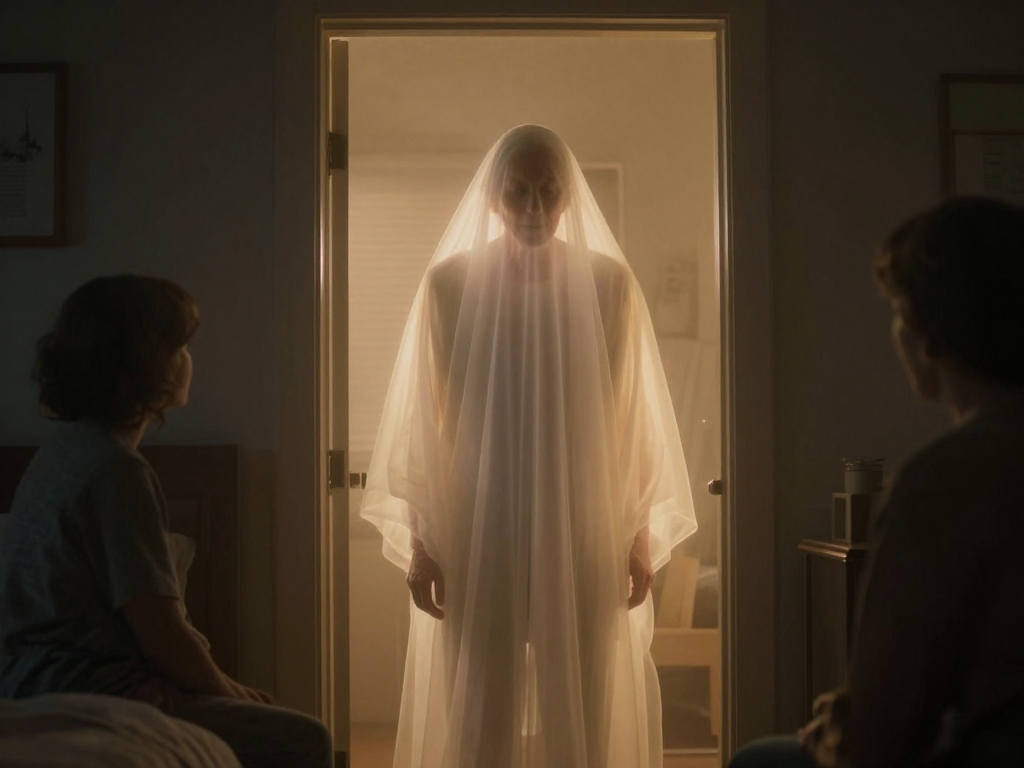
They appear in your dream as naturally as if they had never left. Your grandmother is sitting in her kitchen, cooking the dish she always made. Your father is laughing at something you said. Your friend who died too young is walking beside you, talking about ordinary things as if nothing happened. The dream feels different from other dreams — more vivid, more real, more present. And when you wake up, the emotions linger for hours: a warmth, a sadness, a strange comfort, sometimes a message you cannot quite articulate but feel in your bones.
Dreams about dead people are among the most emotionally powerful and spiritually significant dream experiences reported across human cultures. Whether you interpret them as messages from beyond, the brain's way of processing grief, or something that defies simple categorization, these dreams consistently rank among the most impactful experiences people report in dream research. Understanding dreams about dead people requires holding space for both scientific explanation and the profound mystery that these dreams carry.
Why Dreams About Dead People Are So Common
Research on bereavement dreams — the clinical term for dreams involving deceased individuals — has expanded significantly in recent decades. A study published in the journal Death Studies found that approximately 60 percent of bereaved individuals report dreaming about their deceased loved ones, with many experiencing these dreams for years or even decades after the loss. A broader study from the journal Omega found that dreams about dead people are not limited to the recently bereaved — they appear in the dreams of people who lost loved ones long ago, and even in the dreams of people processing ancestral or cultural grief.
The prevalence of these dreams is rooted in the nature of human attachment. The bonds we form with significant people in our lives are not severed by death — they continue as internalized representations, neural networks of memory and emotion that persist as long as the living brain maintains them. When we dream, the brain accesses these networks, and the deceased person appears not because they are reaching across from another dimension (though some traditions believe exactly this) but because the emotional bond is still active, still being processed, still relevant to the dreamer's psychological life.
The emotional intensity of these dreams also plays a role. Death is the most emotionally charged event in human experience, and the dreaming brain preferentially processes high-emotion material. The combination of deep attachment and intense emotion makes deceased loved ones prime candidates for dream appearances.
6 Key Meanings of Dreams About Dead People
1. Grief Processing — The most widely accepted psychological explanation for dreams about dead people is that they serve as a vehicle for grief processing. Grief is not a linear process with a defined endpoint — it is a lifelong adjustment to the absence of someone who mattered deeply. Dreams about the deceased allow the grieving brain to revisit the relationship, experience the emotions of connection and loss, and gradually integrate the reality of the person's absence into a new emotional landscape. These dreams may be particularly common in the first year after a loss, but they can appear at any point in the grieving process — often triggered by anniversaries, life milestones, or situations that evoke memories of the deceased.
2. Continued Emotional Connection — Some researchers, notably the attachment theorist John Bowlby, have proposed that dreams about deceased loved ones serve to maintain the emotional bond even after death. This concept, now called continuing bonds theory, challenges the older view that healthy grief requires fully detaching from the deceased. Instead, modern grief psychology recognizes that maintaining an internal relationship with the deceased — through memory, ritual, and dreams — is a natural and healthy part of bereavement. The dream is not a sign that you have not moved on; it is a sign that the bond remains meaningful.
3. Seeking Guidance or Wisdom — Many people report that their deceased loved ones appear in dreams to offer advice, reassurance, or guidance during difficult periods. Whether interpreted psychologically or spiritually, this pattern is remarkably consistent across cultures. From a psychological perspective, the dreamer's brain may be accessing internalized wisdom — the values, perspectives, and advice that the deceased person embodied during their lifetime — and presenting it in the form of a dream conversation. The guidance feels like it comes from outside because it originates from a part of the psyche that the dreamer does not normally access in waking life.
4. Resolution of Unfinished Business — If your relationship with the deceased was complicated — if there were unspoken words, unresolved conflicts, things you wish you had said or done differently — dreams about them may serve as a space for resolution. The dream may replay or revise the relationship, allowing you to express what was never expressed, to hear what was never said, to experience the closure that death made impossible. These dreams can be profoundly healing, even though they are not "real" conversations. The emotional processing they enable is real, even if the interaction itself occurs only within the dreaming mind.
5. Visitation Dreams: A Special Category — Researchers and clinicians have identified a distinct category of bereavement dreams known as visitation dreams. These dreams are qualitatively different from ordinary dreams about the deceased. They are characterized by exceptional vividness, a sense of the deceased being genuinely present (not just a dream character), emotional tone that is typically peaceful and reassuring, and a message or communication from the deceased that feels meaningful and intentional. Research from the journal Dreaming found that people who experience visitation dreams consistently describe them as categorically different from regular dreams — more real, more significant, and more comforting. Whether these represent actual spiritual visitation or a special type of consolidation dream produced by the grieving brain remains one of the great open questions at the intersection of psychology and spirituality.
6. Mortality Awareness and Existential Processing — Dreams about dead people can also serve as the dreamer's own confrontation with mortality. Seeing the deceased in a dream reminds the dreaming mind that death is real, that separation is permanent, and that the dreamer, too, will one day die. These dreams may be unsettling, but they serve an important existential function — they keep the dreamer in contact with the fundamental truths of human existence and can motivate more intentional, meaningful living.
Cultural Perspectives
In many African, Asian, and indigenous traditions, dreams about dead people are understood as genuine communication from the spirit world. The deceased are not gone; they have transitioned to another form of existence from which they can interact with the living through dreams. In many West African traditions, dreams from ancestors carry the authority of spiritual guidance, and ignoring them is considered disrespectful and potentially dangerous. Family members may consult elders or spiritual practitioners to interpret these dreams and determine the appropriate response — which might include ritual offerings, prayers, or specific actions in the waking world.
In Japanese culture, the concept of yumeji — the dream path — holds that the dead and the living can meet in dreams, and that these encounters are real connections across the boundary between worlds. Obon, the annual festival honoring the dead, is deeply connected to this belief, and dreams of ancestors during this period are considered especially significant.
In the Mexican tradition of Dia de los Muertos, the relationship between the living and the dead is celebrated rather than feared. Dreams about deceased loved ones are understood as natural expressions of the ongoing bond between the living and the dead — a bond that death interrupts but does not destroy. The tradition teaches that the dead are never truly gone as long as they are remembered, and dreams are one of the primary ways this remembering occurs.
In Christian tradition, dreams about dead people have been interpreted in various ways throughout history. Some traditions view them as spiritual encounters — messages from souls in heaven or purgatory. Others take a more cautious view, warning that not all dream figures are what they appear to be. The emotional content and theological consistency of the dream are often used as criteria for discernment.
In Islamic tradition, dreams about deceased people are taken seriously and are often classified as either true visions (ru'ya) or ordinary dreams. A dream in which the deceased appears healthy, happy, and at peace is generally interpreted as a sign that the person is in a good state in the afterlife. A dream in which the deceased appears distressed may be interpreted as a request for prayers (dua) or charitable acts on their behalf.
What Psychology Says
Freud approached dreams about dead people through his theory of wish fulfillment. For Freud, dreaming of a dead person as alive could represent the dreamer's wish that the person had not died — a straightforward denial of loss through the fantasy of the dream. He also explored the possibility that dreams about the dead could represent repressed hostile wishes — particularly in cases where the dreamer had ambivalent feelings toward the deceased. While Freud's theory captures some dimensions of these dreams, it is widely considered insufficient to explain the full range of bereavement dream experiences.
Jung's approach was more expansive. He viewed dreams about dead people as potentially meaningful on multiple levels — psychological, symbolic, and possibly spiritual. For Jung, the deceased in a dream could represent the dreamer's relationship with death itself, with the archetype of the Wise Old Man or Great Mother, or with aspects of the self that the deceased person embodied. Jung was also notably open to the possibility that some dreams about the dead might involve genuine communication with the departed — a position that set him apart from most of his contemporaries and continues to make his work relevant to people who experience these dreams as spiritual events.
Modern research on bereavement dreams has moved beyond both Freud and Jung to focus on empirical investigation of their frequency, content, and psychological effects. Studies consistently show that bereavement dreams are associated with positive grief outcomes — people who dream about their deceased loved ones report lower levels of complicated grief, greater sense of meaning-making, and a stronger feeling of continued connection with the deceased. A landmark study by Joshua Black at Trent University found that visitation dreams in particular provide measurable comfort and contribute to healthy grief resolution. This suggests that the brain's production of these dreams is not pathological but adaptive — a natural mechanism for healing.
Common Scenarios
The deceased appears healthy and happy — This is the most comforting type of bereavement dream and the one most often described as a visitation dream. The deceased looks well, appears at peace, and may communicate reassurance — that they are okay, that they are watching over you, that you should not worry. These dreams leave the dreamer with a lingering sense of peace and often reduce grief intensity.
The deceased appears as they did before death — When the deceased appears in the condition they were in before dying — particularly if the death involved illness or physical decline — the dream may reflect the dreamer's unprocessed images of suffering. The dream is revisiting the trauma of witnessing the decline and may be part of the brain's effort to process and integrate these difficult memories.
The deceased gives a message or warning — Many dreamers report receiving specific messages from the deceased — advice about a decision, a warning about a person or situation, or information they had no way of knowing. Whether interpreted as spiritual communication or the dreamer's own unconscious wisdom presented in symbolic form, these dreams carry tremendous emotional significance and are often described as turning points in the dreamer's life.
Discovering that the deceased is not actually dead — This dream — where you realize the person is alive and the death was a mistake — often reflects denial or the early stages of grief. The brain has not yet fully accepted the permanence of the loss, and the dream creates a reality where the loss has not occurred. This dream can also appear much later, reflecting a momentary wish for the impossible.
Having a conversation with the deceased — Dream conversations with the dead are among the most valued bereavement dream experiences. The conversation may be about mundane topics — which can be deeply comforting in its normalcy — or about profound subjects: the nature of death, the meaning of the dreamer's life, guidance for the future. These conversations often feel qualitatively different from other dream dialogue — more coherent, more intentional, more real.
What Our AI Dream Interpreter Says
Dreams about dead people are among the most sacred entries in our dream journal app, and our AI interpreter approaches them with the depth and sensitivity they require. The AI evaluates multiple dimensions: the identity and significance of the deceased person, the emotional tone of the dream (peaceful, distressing, neutral, bittersweet), the nature of the interaction (conversation, presence, message, shared activity), the time elapsed since the death, and the dreamer's current life circumstances. One user logged a dream in which their deceased mother appeared in a garden they had never seen and said simply, "It is time to plant something new"; the AI interpreted this as the deceased representing the dreamer's own inner wisdom, using the garden metaphor to encourage a new creative or personal growth phase the dreamer had been hesitating to begin. Another user reported recurring dreams of a deceased friend who appeared increasingly distant in each dream; the interpreter analyzed the progression as a natural part of grief integration — the friendship evolving from acute loss to internalized memory, with the increasing distance reflecting healthy acceptance rather than disconnection. Our AI dream interpreter recognizes that dreams about dead people exist at the boundary between psychology and mystery, and it honors both — providing psychological insight while respecting the profound significance these dreams hold for the dreamer.
When to Be Concerned
Dreams about dead people are natural, common, and overwhelmingly associated with positive grief outcomes. However, certain patterns may indicate the need for professional support. If dreams about a deceased person are persistently distressing — involving scenes of suffering, accusations from the dead, or traumatic replays of the death itself — and are accompanied by waking symptoms of complicated grief (inability to function, persistent disbelief about the death months or years later, intense yearning that does not diminish over time), a grief therapist or bereavement counselor can provide specialized support. If dreams about the deceased are associated with survivor's guilt — the belief that you should have died instead or that you could have prevented the death — therapeutic processing is strongly recommended. If dreams of the dead are accompanied by a desire to join the deceased or by suicidal ideation, seek professional support immediately.
Dreams about dead people are one of the most human experiences there is. They are the mind's way of honoring bonds that death cannot fully sever, of processing the grief that accompanies every deep attachment, and of keeping alive the memory of those who shaped us most profoundly. Whether these dreams are messages from the other side, the brain's beautiful machinery of memory and emotion at work, or something that transcends either explanation, they deserve our attention, our respect, and our willingness to sit with the mystery they carry. The next time a dead person appears in your dream, do not be afraid. Let them speak. Let them stay. Let the dream do what it was meant to do — connect you, however briefly, with someone whose absence has changed the shape of your life, and remind you that love, in its deepest form, does not end when breathing stops.