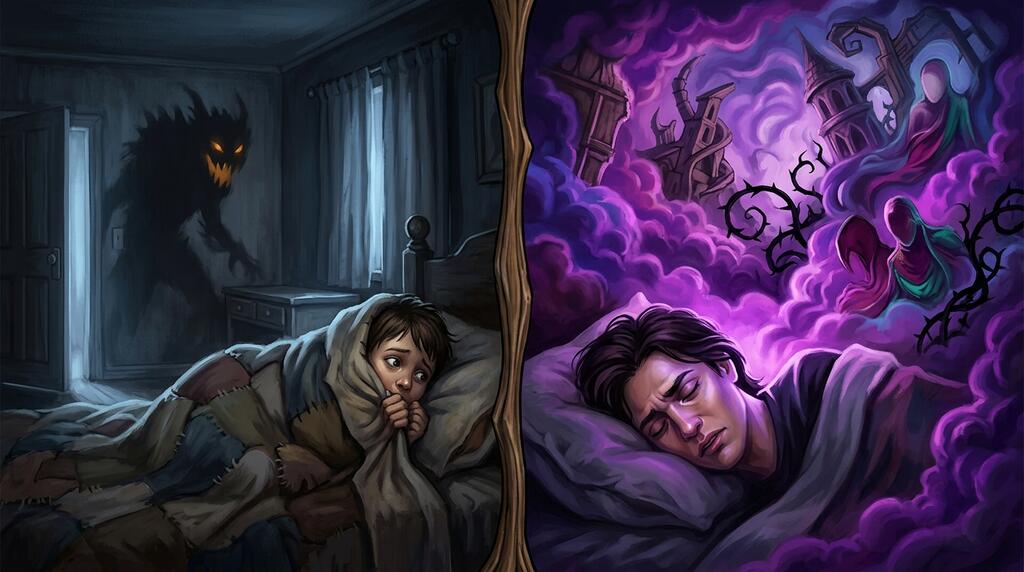
Night terrors and nightmares are often confused, but they are fundamentally different experiences that occur during different sleep stages and require different approaches to manage.
Nightmares happen during REM sleep, usually in the second half of the night when REM periods are longest. You're fully asleep but dreaming vividly. Upon waking, you can recall the dream clearly, and while the content is disturbing, you quickly orient to reality and recognize it was a dream.
Night terrors occur during non-REM deep sleep, typically in the first third of the night. The person may sit up, scream, thrash, or appear absolutely terrified — yet they're not fully awake and are not experiencing a dream in the traditional sense. They usually have no memory of the episode in the morning.
The physiological responses differ dramatically. During a nightmare, your body is largely paralyzed by REM atonia — the natural muscle paralysis that prevents you from acting out dreams. During a night terror, there's no such paralysis, which is why people can physically move, run, or even become aggressive.
Children experience night terrors far more frequently than adults — about 40% of children have them, compared to roughly 2% of adults. They typically peak between ages 3-7 and are usually outgrown by adolescence. In adults, night terrors may be triggered by extreme stress, sleep deprivation, fever, or certain medications.
Managing nightmares and night terrors requires different strategies. For nightmares, Imagery Rehearsal Therapy (IRT) is highly effective: while awake, you reimagine the nightmare with a different, positive ending, then mentally rehearse this new version. Over time, this can change the nightmare pattern. Cognitive behavioral techniques, stress management, and addressing underlying anxiety also help.
For night terrors, the primary approach is ensuring safety. Don't try to wake someone during a night terror — it can increase confusion and agitation. Instead, gently guide them back to bed if they've gotten up. Maintaining consistent sleep schedules, ensuring adequate sleep, and reducing stress are the most effective preventive measures.
Sleep environment matters for both conditions. A cool, dark, comfortable bedroom reduces both nightmares and night terrors. Avoid screens, heavy meals, and alcohol before bed. For children prone to night terrors, a regular calming bedtime routine is essential.
If either condition is severe, frequent, or significantly impacts daily life, professional evaluation is warranted. In rare cases, night terrors in adults can be associated with underlying sleep disorders like sleep apnea, or neurological conditions that benefit from treatment.